

Built for Company
Designing your everyday life for easy hosting

Most people think good hosting starts with party planning.
I think it starts much earlier; on a random Tuesday, when no one is coming over, and you’re just living your life.
The reason why hosting feels hard isn’t because people don’t know how to do it. It’s because their everyday life isn’t set up to support it. When everything requires special effort (special food, special dishes, special decor), having people over becomes a project rather than a regular hang out session with several good friends.
When I think about some of the best get-togethers I’ve been to, I realize that they’re the ones where the hosts who make it look easy aren’t trying too hard. The best hosts that I’ve known are usually at ease during parties and they’re actively participating in conversations and activities - and in turn, as a guest, I feel at ease. They’ve simply designed their daily routines, spaces, and defaults to reduce friction. So, hosting becomes a byproduct rather than a production.
Think in systems, not events
When hosting feels overwhelming, it’s usually because you’re starting from zero every time. You’re asking: What should I make? What should I clean? What should I buy? What should I set up?
My husband, for all of the wonderful qualities that he possesses, is not a planner. He is the type of person who “plans” a gathering around 24 hours before it starts. When we moved in together, I started to notice that he would spiral into the many questions I listed above, and then some. What should we serve? Should we make a full dinner? We need to vaccuum every square inch of the apartment! Should we buy a sound system? How can we get a projector in less than 12 hours?
(I can’t tell you how many times we’ve literally rushed to a store to buy the most random things - a sound bar, a rug, a chair…I do not recommend it)
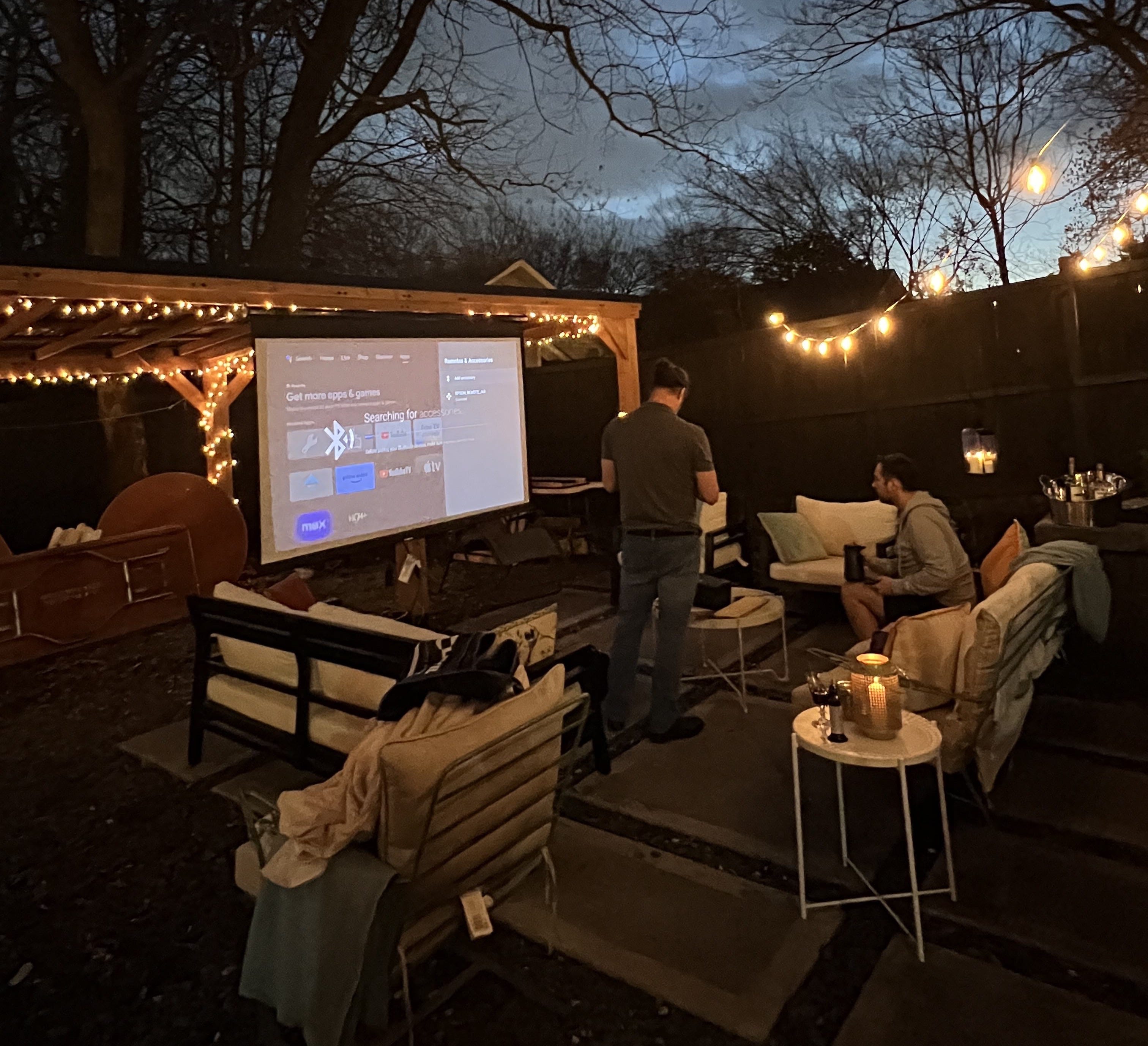
That’s a lot of (often, expensive) decisions for just one night and one event. Lack of planning time isn’t the issue here - if you have more time in advance to plan, you can easily spiral and overthink every decision. If you have less time to plan, you can feel rushed and make compromises that you wouldn’t want to make, which leads to the haunting “should I have done this?” question.
The issue here is the culmination of making so many, big decisions (buying furniture is a big decision!) in a very condensed amount of time. Before you know it, you’re now the victim of decision fatigue and it’s easier to just cancel everything and go to bed.
Decisions you can make today - party or no party
The obvious antidote to decision fatigue is to reduce the amount of decisions. If we break down the issue, we have three things that are working against us:
The amount of decisions
The size of decisions
and the time which we have to make decisions
I’m a huge fan of efficiency - let one action do more than one job. If we design our everyday life so the answers are already there, there will be less guesswork, maybe even less big decisions to be made in a shorter span of time. All before the invite ever goes out, and while making our everyday life a little simpler.
Below are a few ideas that you can action today.
1. Aggressively limit single-use dishes and decor
As much as I love my house (and I love it a lot), it is deceptively inefficient when it comes to storage. There is very little of it, so every square inch of closet and cabinet space is valuable real estate. For this reason, I have very few “special occasion” dishes and decorations. All of my holiday decorations, gifting tools, table china, and disposables live in one small “closet” that is 20” deep, 40” wide, and 5’ tall (it’s part of my former attic).
In part one, I talked about my everyday dishes. I highly recommend investing in dishes you’re happy to use every day and when people come over. Simple, durable, dishwasher-safe plates and bowls that work for breakfast cereal, pasta, snacks, and parties alike. Nothing super precious. Nothing that requires handwashing or careful handling.


The same idea can be applied to decor. Instead of decorating for a special occasion, I highly recommend decorating for everyday life. The things that make home feel warm on any given weekdays are the same things that make it feel welcoming when it’s full: lamps, candles, flowers, objects you like seeing every day. Find pieces that are interesting and that you love. Your home is meant to be a reflection of who you are.
Avoid one-time-use decor as much as possible. It’s expensive at the end and wasteful. Instead, collect pieces that are flexible and repeatable—things you can move, rearrange, or reuse for any gathering without thinking. Simple vases, trays, and picture frames are usually perfect examples.


Limiting single-use decorations and dishes does a few things:
It removes the mental load of deciding what to use - your options are right there in front of you
It reduces the amount of storage boxes you need
It reduces the cost-per-use, so it justifies purchasing something you really like (as my husband likes to say, “buy once, cry once”)
It makes hosting feel like an extension of daily life, not a performance
If your dishes already work and you love the way your home feels, you’re halfway there.
2. Prioritize the invisible resets
There are a few small systems that quietly support hosting more than anything else, and will also make adulting seem less like a chore.
Store all of your extra hand soap, hand towels, and toilet paper in the bathroom. This seems obvious, but you’d be surprised how many people don’t actually do this. Make it easy for guests to find so they can help themselves. You can store hand towels on hooks. Get a clear soap dispenser so you’ll see when you run out of soap. Get a toilet paper holder that has storage capacity.
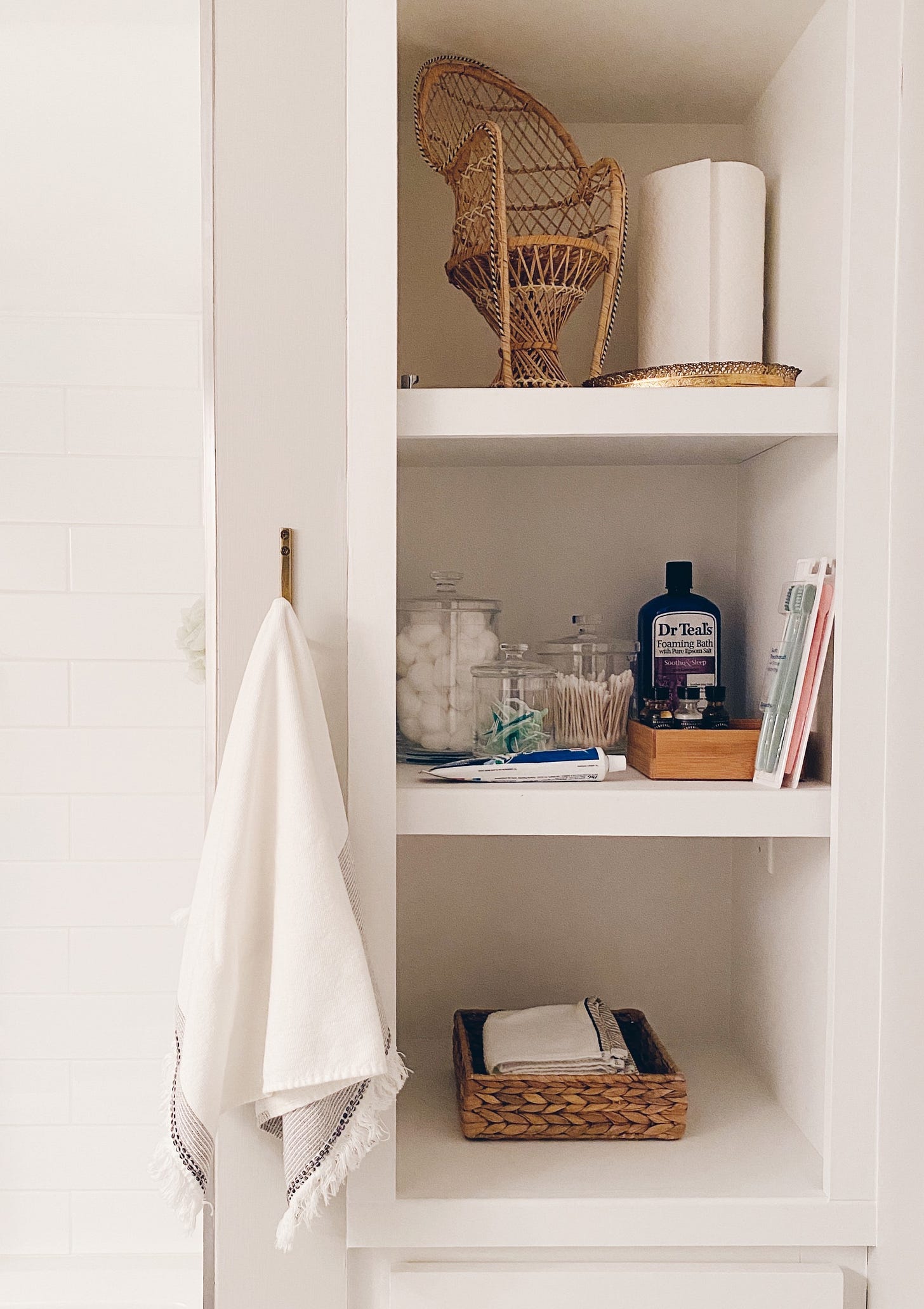
I stock a few other overnight essentials in my bathroom incase guests have a little too much fun and need to stay over. Extra towels, toilet paper, and soap are all stored in the cabinet below the shelves. Get a trash can with a hinged lid, and line it with a bag. This makes your restroom, kitchen, other rooms tidier (who wants to look at trash?!) and makes for an easier cleanup. Before you start your party, make sure your trash cans are empty to prevent quick overflow.
For a bathroom trash can, please get a minimum of 5 liters. Don’t get cute and get those mini baby ones, you’ll see overflow quickly
If you have one of those double-bin trash cans with a recycling section, first - good for you! Second, label the bins with what can actually go into the recycling. This will serve as a reminder for everyone and will prevent you from having to re-sort your recycling later.
Prioritize emptying the dishwasher. This is a good habit to develop anyway, but it is especially helpful for parties. This way, when you’re cleaning up afterwards, your dishwasher is ready to go.
Make sure everything has a home. Make a habit of putting things away - books in bookcases, blankets folded, sink empty - before you go to bed. Waking up to a tidy home is kind of the best. Keeping your home generally tidy makes you more ready to have people over.
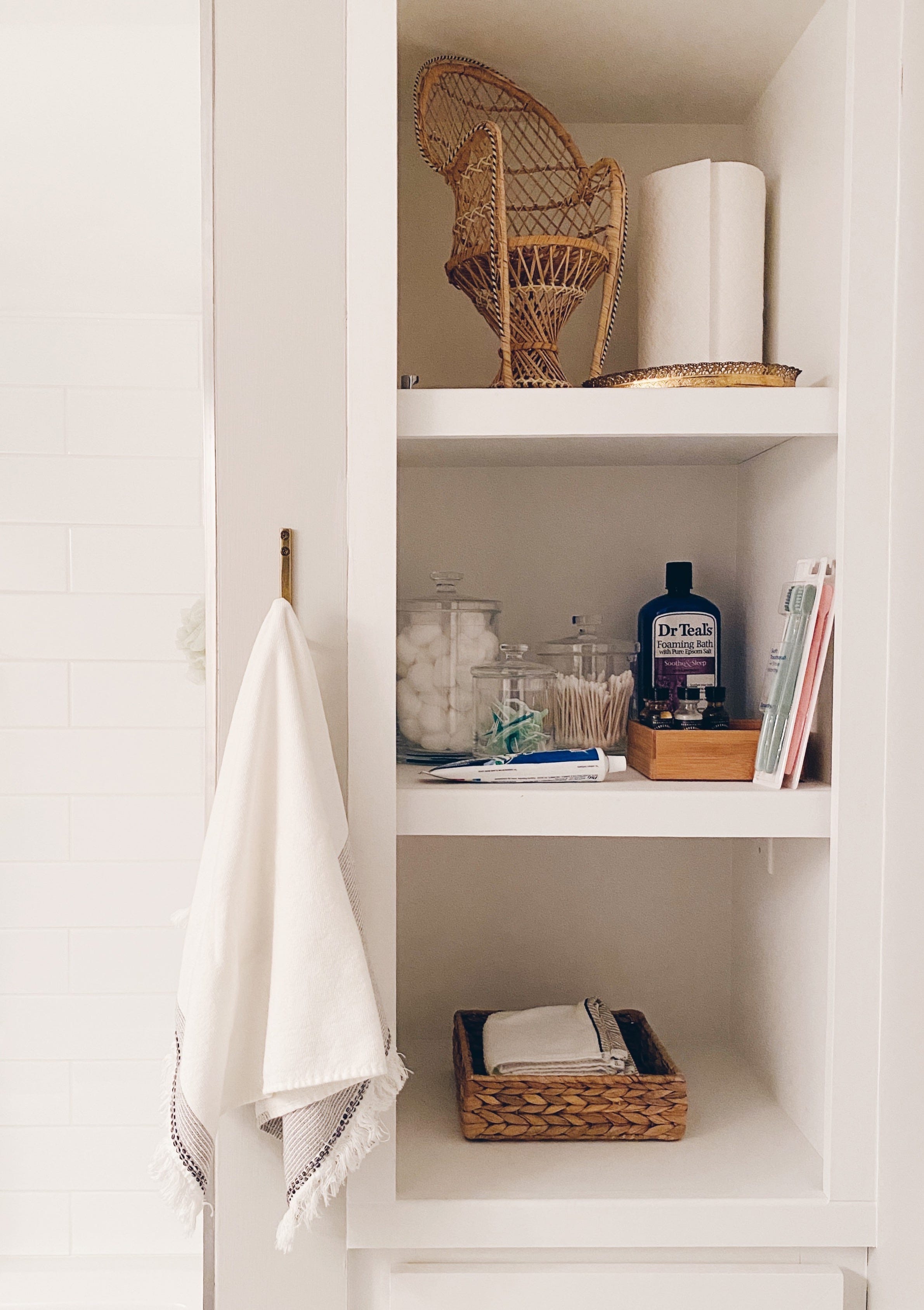
None of these are glamorous, yet all of them matter. They make your home feel ready.
3. Stock default food
The easiest gatherings happen when food doesn’t require a trip to the store. Personally, this is a tough one for me because I love grocery stores and grocery shopping. However, in a pinch, having just a few good snacks at home will at least help you buy time while waiting on Uber Eats.
I try to keep a few things on hand at all times:
Something salty (chips, crackers, cheese)
Something fruity (I am a huge grapes fan - fruit, crackers, and cheese make an amazing platter)
Something frozen (pizza or dumplings that you can pop into the oven or air fryer)
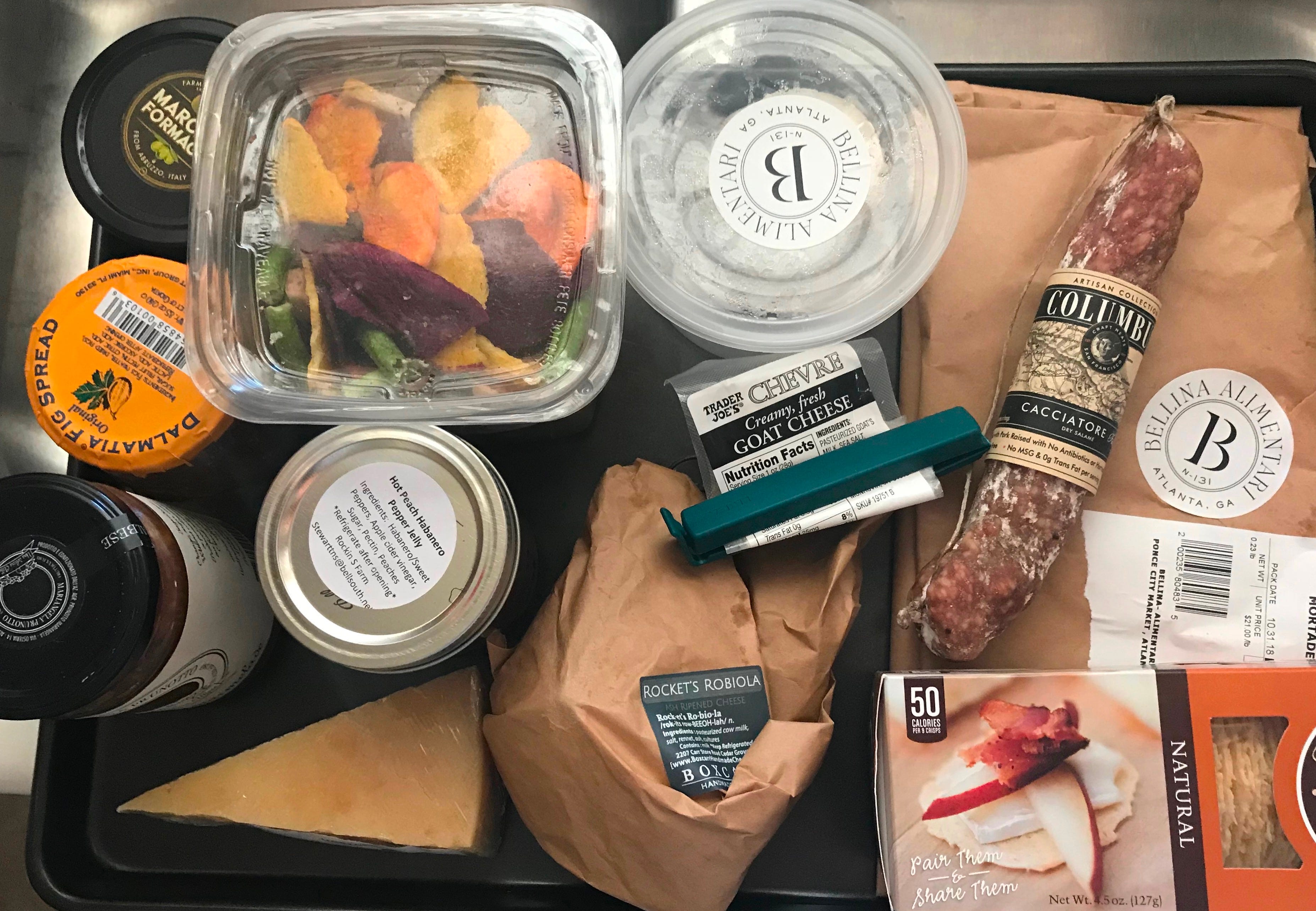
This isn’t about stocking a perfect pantry. It’s about knowing, without thinking, that you can feed people enough. Don’t let the lack of “real” food stall your plans.
4. Lower the threshold for “good enough”
This might be the most important part, and it may also be the toughest one to do. If hosting only happens when your house is spotless, your fridge is full, and your energy is high, it won’t happen often.
Designing your life for easy hosting means deciding—ahead of time—what doesn’t need to be true.
Every square foot of your floors don’t need to be eat-off-the-floor-clean. Chances are, people will walk in with outside shoes, and you’ll need to clean again anyway.
Your food doesn’t need to be homemade.
Your space doesn’t need to be finished. An in-progress home project is a great conversation topic!
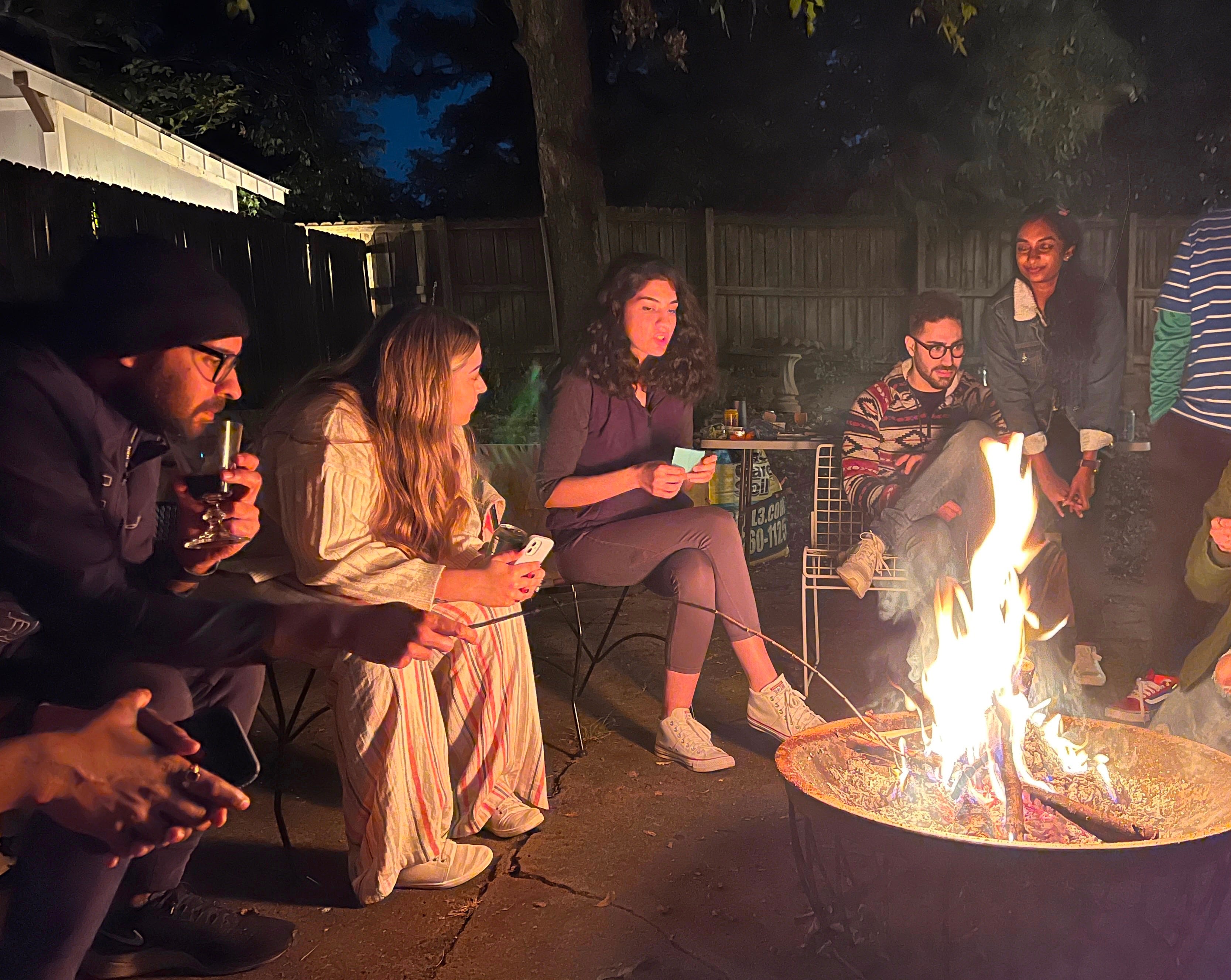
Your home needs to be lived in and needs to reflect you and your current state of life. It needs to be clean enough. People are there to see you and others.
When you design your everyday life this way, something subtle shifts. Invitations stop feeling like commitments, hosting stops feeling like a performance, and “come on over” becomes something you can say without freaking out. Not because everything is perfect—but because everything is ready enough. The best gatherings grow out of ordinary days.
Such good reminders here about how to keep a home that is always ready for guests. I also think in this Pinterest era it can be so easy to get caught up in how an event looks rather than how it feels. People do not care if your baseboard have been dusted!